
Today’s customers rarely make a purchase after seeing a single advertisement. Instead, they research brands, browse social media profiles, read reviews, and evaluate how businesses interact with their audience before making a decision. This shift in consumer behavior has made social media marketing one of the most effective ways for brands to build credibility, generate leads, and drive revenue.
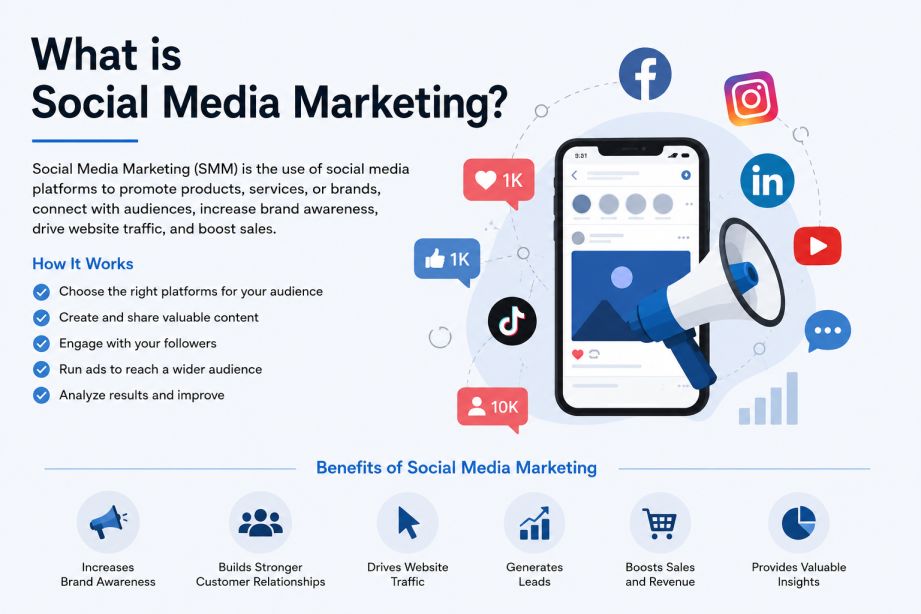
Social media marketing (SMM) involves using platforms such as Facebook, Instagram, LinkedIn, YouTube, and X to connect with potential customers, increase brand visibility, and encourage meaningful engagement. Whether through organic content, paid advertising, or customer interactions, social media helps businesses stay relevant and competitive in today’s digital marketplace.
Table of Contents
- Key Takeaways
- What Is Social Media Marketing?
- Organic vs. Paid Social Media Marketing
- How Social Media Marketing Drives Business Growth
- Benefits of Social Media Marketing
- Choosing the Right Social Media Platform
- Proven Social Media Marketing Strategies
- Essential Social Media Marketing Tools
- Social Media Marketing Costs
- When to Hire a Social Media Marketing Agency
- Why Businesses Invest in Professional Social Media Marketing
- Frequently Asked Questions
- Conclusion
Key Takeaways
- Social media marketing helps businesses increase visibility, trust, and customer engagement.
- Effective campaigns combine content creation, audience engagement, advertising, and performance tracking.
- Key benefits include brand awareness, lead generation, website traffic, and customer retention.
- Businesses often achieve better results by focusing on one or two platforms instead of trying to manage all channels.
- Popular tools include Canva, Buffer, Hootsuite, Google Analytics 4, and Meta Ads Manager.
- Costs vary depending on content requirements, advertising budgets, and management resources.
- Professional support can help businesses scale faster and improve campaign performance.
What Is Social Media Marketing?
Social media marketing is the process of using social networking platforms to promote products, services, and brands while building meaningful relationships with audiences. The primary objective is not simply gaining followers but creating opportunities that lead to inquiries, appointments, sales, and long-term customer loyalty.
A successful social media marketing strategy typically includes:
Content Creation
Creating valuable posts, videos, stories, carousels, and live streams that educate, entertain, or inspire the audience.
Community Engagement
Responding to comments, direct messages, mentions, and customer questions to build trust and strengthen relationships.
Paid Advertising
Running targeted campaigns that promote products, services, lead forms, website visits, and customer inquiries.
User-Generated Content & Influencer Marketing
Leveraging customer testimonials, reviews, and creator collaborations to increase credibility.
Customer Support
Providing fast responses and assistance through social channels where customers already spend their time.
Analytics and Reporting
Tracking performance metrics to understand what content and campaigns contribute to business goals.
For example, a local dental practice might publish educational videos, patient success stories, and treatment explanations while promoting consultation offers through targeted advertisements. The content builds confidence, and the ads encourage potential patients to take action.
Organic vs. Paid Social Media Marketing
Understanding the difference between organic and paid social media is essential for building an effective strategy.
Organic Social Media
Organic marketing focuses on unpaid activities, including:
- Regular content publishing
- Audience engagement
- Community building
- Brand awareness
While organic growth takes time, it helps establish trust and long-term relationships with followers.
Paid Social Media
Paid social media involves advertising to reach targeted audiences quickly. Common campaign objectives include:
- Lead generation
- Website traffic
- Product sales
- Appointment bookings
- Brand awareness
A powerful paid strategy often includes retargeting, which allows businesses to show ads to people who have already visited their website or interacted with their content. Since these users are familiar with the brand, conversion rates are often higher.
How Social Media Marketing Drives Business Growth
Many businesses struggle with social media because they post inconsistently or lack a clear strategy. Successful social media marketing follows a structured process:
1. Define a Goal
Choose one primary objective such as:
- Generating leads
- Increasing website traffic
- Driving sales
- Booking appointments
- Growing brand awareness
2. Create Helpful Content
Address customer questions, concerns, and challenges through valuable content that demonstrates expertise.
3. Provide a Clear Call-to-Action
Guide users toward the next step, whether it’s:
- Sending a direct message
- Completing a form
- Booking a consultation
- Visiting a landing page
4. Follow Up Promptly
Timely responses significantly improve conversion rates and customer satisfaction.
5. Analyze and Optimize
Review performance regularly and invest more resources into content and campaigns that generate measurable results.
Businesses often notice increased visibility and engagement within the first few months, while consistent lead generation typically develops through sustained effort and optimization.
Benefits of Social Media Marketing
Increased Brand Awareness
Social media keeps businesses visible and helps audiences become familiar with a brand over time.
More Website Traffic
Strategic content and advertising campaigns can drive qualified visitors to websites, landing pages, and online stores.
Better Lead Generation
Features such as lead forms, direct messaging, and click-to-call ads make it easier for potential customers to connect with businesses.
Improved Customer Trust
Reviews, testimonials, user-generated content, and active engagement help reduce hesitation and build credibility.
Cost-Effective Marketing
Compared to traditional advertising, social media offers affordable opportunities to test messaging, creative assets, and audience targeting.
Greater Local and Global Reach
Businesses can target local customers or expand into international markets using advanced audience segmentation.
Stronger Customer Retention
Regular engagement helps brands stay top-of-mind, encouraging repeat purchases and long-term customer relationships.
Choosing the Right Social Media Platform
Selecting the right platform depends on where your target audience spends time and how they make purchasing decisions.
Ideal for:
- Local businesses
- Service providers
- Community-focused marketing
- Lead generation campaigns
Best for:
- E-commerce brands
- Beauty and fashion businesses
- Restaurants and hospitality
- Visual storytelling
Recommended for:
- B2B companies
- Professional services
- Recruitment and employer branding
- Thought leadership content
YouTube
Effective for:
- Educational content
- Product demonstrations
- Tutorials and reviews
- Long-term organic traffic
X (Formerly Twitter)
Useful for:
- Industry discussions
- Real-time updates
- Technology communities
- Customer support interactions
Most small businesses achieve better results by mastering one or two platforms before expanding further.
Proven Social Media Marketing Strategies
Create Authentic Video Content
Short-form videos continue to perform exceptionally well because they are easy to consume and highly engaging.
Focus on One Message Per Post
Avoid overwhelming audiences. Each piece of content should communicate a single idea or solution.
Build a Genuine Community
Respond thoughtfully to comments and messages rather than relying on generic replies.
Use AI as a Support Tool
AI can help generate ideas and improve workflows, but content should maintain a human voice and authentic perspective.
Stay Consistent
Consistency often outperforms occasional bursts of activity. A realistic content schedule is easier to sustain long term.
A Sustainable Weekly Content Plan
Businesses can maintain consistency with a simple schedule:
- 1 educational video
- 1 customer success story
- 1 practical tip or tutorial
- 1 promotional offer
- Additional engagement-focused posts as needed
Batch content creation and reusable templates can reduce workload while maintaining quality and brand consistency.
Paid Advertising Funnel Basics
A simple social media advertising funnel typically includes:
Top of Funnel (Awareness)
Promote educational content to introduce the brand to new audiences.
Middle of Funnel (Consideration)
Drive traffic to landing pages, lead forms, or informational resources.
Bottom of Funnel (Conversion)
Retarget interested users with offers, testimonials, case studies, and urgency-driven messaging.
Effective offers may include:
- Free consultations
- Product trials
- Quotes and estimates
- Demonstrations
- Limited-time promotions
Testing one variable at a time helps identify what truly improves performance.
Essential Social Media Marketing Tools
Content Design
Canva simplifies graphic creation through templates and drag-and-drop editing.
Scheduling and Publishing
Buffer and Hootsuite help businesses schedule content and maintain consistent posting.
Analytics
Google Analytics 4 (GA4) and native platform insights provide valuable performance data.
Advertising Platforms
Tools such as Meta Ads Manager and LinkedIn Campaign Manager allow businesses to create, monitor, and optimize paid campaigns.
The most effective toolset is often the simplest one that the team can use consistently.
How Much Does Social Media Marketing Cost?
Costs vary based on:
- Number of platforms managed
- Content production requirements
- Advertising budgets
- Campaign complexity
- Reporting and analytics needs
Typical Cost Ranges
| Service Type | India (Monthly) | Global (Monthly) |
|---|---|---|
| In-House Management | ₹40,000 – ₹2,50,000 | $500 – $3,000 |
| Agency Management | ₹80,000 – ₹4,00,000 | $2,000 – $10,000 |
Advertising costs vary significantly by industry, audience competition, and creative quality. Businesses should focus on lead quality and revenue rather than simply tracking clicks.
When Should You Hire a Social Media Marketing Agency?
Hiring an agency may be the right decision when:
- Internal teams lack time for consistent execution
- Content quality and frequency have declined
- Advertising campaigns are underperforming
- Reporting does not clearly connect marketing efforts to business results
- Growth has stalled despite ongoing activity
A reputable agency should provide strategic planning, content direction, campaign management, and transparent reporting.
Frequently Asked Questions
Why is social media marketing important?
It helps businesses build trust, increase visibility, engage audiences, and generate leads through channels customers use daily.
Is social media marketing effective for small businesses?
Yes. Small businesses often achieve strong results through consistent content, audience engagement, and targeted advertising.
How long does it take to see results?
Brand awareness improvements can appear within one to three months, while predictable lead generation often takes three to six months of consistent effort.
Which industries benefit most from social media marketing?
Industries such as healthcare, education, real estate, e-commerce, professional services, and local businesses frequently achieve strong results.
Do I need to be active on every social platform?
No. Focusing on one or two platforms where your audience is most active usually delivers better results than spreading resources too thin.
Conclusion
Social media marketing is more than posting content online. It is a strategic approach to attracting attention, building trust, and converting engagement into business growth. By combining valuable content, meaningful interactions, targeted advertising, and ongoing analysis, businesses can create a sustainable system for generating leads and increasing revenue.
The most successful brands understand that social media is not about chasing followers—it is about creating relationships that drive measurable business outcomes.